And the Democrats are perfectly happy to [compromise] because they take the same, if not more, amount of money from those same corporate lobbyists [as the Republicans]. Except they have the meddlesome problem of pretending to be for the people. Republicans are not burdened with this; everyone expects them to help the rich and the powerful. But the Democrats need cover, and they have the perfect excuse in the mantle of bipartisanship. What could they do, the Republicans made them do it! And aren't they so reasonable for compromising?I highly recommend reading the entire article, as it neatly lays out just how it is the Democrats have managed to accomplish very little of substance despite having the largest margins in decades in the Senate and the House, not to mention the Presidency. There is a perpetual balancing act among American politicians of between being a good member of one's political party and engaging in electoral self-preservation (often at the expense of one's party). At the same time, the campaign finance system that is currently in place makes it highly profitable for politicians to kowtow to corporate interests for their own personal gains (in the form of campaign contributions and favorable "issue ads" being run in their districts). Similarly, the national committees of the two parties also have incentives to keep their corporate sponsors happy, as the corporations will then provide more donations to the parties who will then cultivate and fund the campaigns of more mini-corporatist candidates in elections around the country. So in this context, the corporate line is the party line is the individual legislator's line - the corporation wins every time, since the corporation's interests are everywhere reflected in our political system.
This truth of government by corporation is nowhere more evident than in the recent Supreme Court decision Citizens United v. Federal Election Commission. One does not have to look far to find strong reactions to the 5-4 majority ruling and opinion in that case, but the overwhelming consensus is that the Supreme Court has effectively granted US citizenship to corporations, with every faculty intact but the right to cast a vote for a political candidate. I am rather tired tonight, and not in the best position to discuss the implications of this case fully, but let me say this: corporations exist for no other reason than to make a profit. That is their sole motivation. While corporate interests have been donating to politicians (and hence altering their political calculations) for years, Citizens United gives those interests expanded rights to pursue their ends through political channels, rather than through competition in the open marketplace. This ruling creates incentives for corporations to find the politicians who will do their bidding most effectively, rather than spend more money on R&D to improve their product or service. The ruling also creates incentives for politicians to be the most effective advocates for their corporate sponsors that they can be, regardless of the effects on the public at large. The money is, in effect, divorcing us from our elected representatives. This is nothing particularly new, mind you. But these activities have never in our country's history been given such explicit sanction by our highest court, and the effects have the potential to be disastrous.
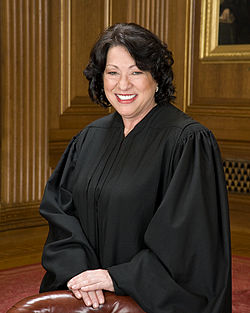
Elections have consequences, and those consequences are often most apparent in the makeup of the Supreme Court, where justices have lifetime appointments. We need a lot more Sonia Sotomayors to make up for this ruling.


