Showing posts with label insurance. Show all posts

Tuesday, March 23, 2010

A Public Service Announcement

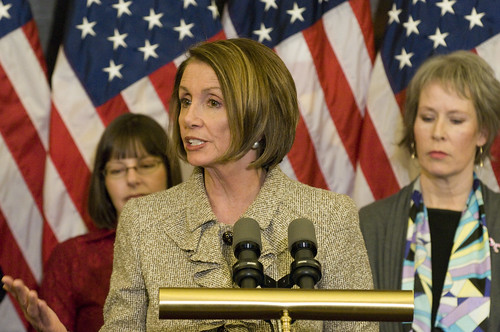
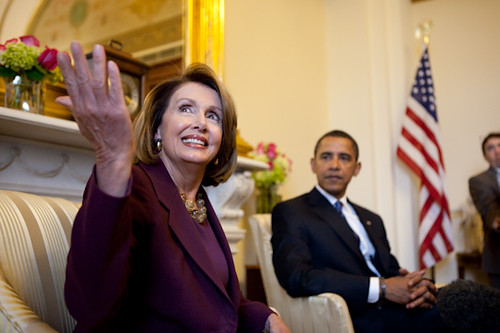
Speaker Pelosi and President Obama, take a bow
I didn't think I would blog tonight, despite many interesting developments in the political world since Sunday night (did you know that 24% of Republicans think our President could be the Antichrist?)  I strive for substance over filler on this blog, and I didn't feel I could summon the mental energy to write a quality post, but something caught my attention which was just too good not to share.  Following up on Sunday's posting about the health insurance reform bill, I was directed to this fantastic, clearly-defined blog posting from Speaker Pelosi's website detailing further what Americans can immediately expect from the health care bill; there's something for everyone:

(And before you check the posting below, just another note that the health care bill has now jumped in popularity since even last weekend, "By 49%-40%, those polled say it was 'a good thing' rather than a bad one that Congress passed the bill."  Compare that to approximately 45% for/48% against on March 9th, not too shabby.  Now that Americans can stop hearing about the sausage-making that went on for 14 months and can start focusing on what the legislation will actually do for them, these reform measures will only rise in popularity.  Also, Sen. Harry Reid is aiming to have the Senate pass the reconciliation bill on Saturday, which will put the final fixes to the reform bill in place, so we will be officially free and clear of this debate.  Onwards to financial reform!)

Lastly lastly: this photo is just beyond words.


What’s In The Health Reform Bill For You Right Away?

March 23rd, 2010 by Karina
Under the legislative package the House passed on Sunday (the Senate-passed health bill as amended by the reconciliation bill) many key provisions take effect this year - here are some of them:

IF YOU ARE A SMALL BUSINESSES OWNER:
SMALL BUSINESS TAX CREDITS—Offers tax credits to small businesses to make employee coverage more affordable. Tax credits of up to 35 percent of premiums will be immediately available. Effective beginning for calendar year 2010. (Beginning in 2014, small business tax credits will cover 50 percent of premiums.)

IF YOU ARE A SENIOR:
BEGINS TO CLOSE THE MEDICARE PART D DONUT HOLE—Provides a $250 rebate to Medicare beneficiaries who hit the donut hole in 2010. Effective for calendar year 2010. (Beginning in 2011, institutes a 50% discount on brand-name drugs in the donut hole; also completely closes the donut hole by 2020.)

FREE PREVENTIVE CARE UNDER MEDICARE—Eliminates co-payments for preventive services and exempts preventive services from deductibles under the Medicare program. Effective beginning January 1, 2011.

HELP FOR EARLY RETIREES—Creates a temporary re-insurance program (until the Exchanges are available) to help offset the costs of expensive health claims for employers that provide health benefits for retirees age 55-64. Effective 90 days after enactment.

IF YOU HAVE PRIVATE HEALTH INSURANCE:
NO DISCRIMINATION AGAINST CHILDREN WITH PRE-EXISTING CONDITIONS—Prohibits health plans from denying coverage to children with pre-existing conditions. Effective 6 months after enactment. (Beginning in 2014, this prohibition would apply to adults as well.)

NO RESCISSIONS—Bans health plans from dropping people from coverage when they get sick. Effective 6 months after enactment.

NO LIFETIME LIMITS ON COVERAGE—Prohibits health plans from placing lifetime caps on coverage. Effective 6 months after enactment.

NO RESTRICTIVE ANNUAL LIMITS ON COVERAGE—Tightly restricts new plans’ use of annual limits to ensure access to needed care. These tight restrictions will be defined by HHS. Effective 6 months after enactment. (Beginning in 2014, the use of any annual limits would be prohibited for all plans.)

FREE PREVENTIVE CARE UNDER NEW PLANS—Requires new private plans to cover preventive services with no co-payments and with preventive services being exempt from deductibles. Effective 6 months after enactment.

NEW, INDEPENDENT APPEALS PROCESS FOR NEW PLANS—Ensures consumers in new plans have access to an effective internal and external appeals process to appeal decisions. Effective 6 months after enactment.

MORE FOR YOUR PREMIUM DOLLAR—Requires plans to put more of your premiums into your care, and less into profits, CEO pay, etc. This medical loss ratio requires plans in the individual and small group market to spend 80 percent of premiums on medical services, and plans in the large group market to spend 85 percent. Insurers that don’t meet these thresholds must provide rebates to policyholders. Effective on January 1, 2011.

NO DISCRIMINATION BASED ON SALARY—Prohibits new group health plans from establishing any eligibility rules for health care coverage that have the effect of discriminating in favor of higher wage employees. Effective 6 months after enactment.

IF YOU DON’T HAVE HEALTH INSURANCE:
IMMEDIATE HELP FOR THE UNINSURED WITH PRE-EXISTING CONDITIONS (INTERIM HIGH-RISK POOL)—Provides immediate access to insurance for Americans who are uninsured because of a pre-existing condition - through a temporary high-risk pool – until the Exchanges up and running in 2014. Effective 90 days after enactment. (Beginning in 2014, health plans are banned from discriminating against all people with pre-existing conditions, so high-risk pools would phase out).

EXTENDING COVERAGE FOR YOUNG PEOPLE UP TO 26TH BIRTHDAY THROUGH PARENTS’ INSURANCE – Requires health plans to allow young people up to their 26th birthday to remain on their parents’ insurance policy, at the parents’ choice. Effective 6 months after enactment.

GENERAL REFORMS:
COMMUNITY HEALTH CENTERS—Increases funding for Community Health Centers to allow for nearly doubling the number of patients served over the next 5 years. Effective beginning in fiscal year 2010.

MORE PRIMARY CARE DOCTORS—Provides new investment in training programs to increase the number of primary care doctors, nurses, and public health professionals. Effective beginning in fiscal year 2010.

HEALTH INSURANCE CONSUMER ASSISTANCE—Provides aid to states to establish offices of health insurance consumer assistance to help consumers file complaints and appeals. Effective beginning in FY 2010.

A NEW, VOLUNTARY, PUBLIC LONG-TERM CARE INSURANCE PROGRAM—Creates a long-term care insurance program to be financed by voluntary payroll deductions to provide benefits to adults who become functionally disabled. Effective on January 1, 2011.
And in 2014, once the exchanges have formed, more insurance reforms go into effect, including:
NO DISCRIMINATION AGAINST ADULTS WITH PRE-EXISTING CONDITIONS
BAN ON HIGHER PREMIUMS FOR WOMEN
PREMIUMS BASED ON AGE CAN ONLY VARY BY A MAXIMUM OF 3-TO-1 RATIO
CAP ON OUT-OF-POCKET EXPENSES for private health plans

Sunday, March 21, 2010

Why I Support The Health Insurance Reform Bill


Speaker of the House Nancy Pelosi

The interminable march towards health care reform (HCR) is continuing in earnest today, with an end finally (FINALLY) in sight.  So what is actually happening right now?  And what's this "reconciliation" business all about?  There's no good way to sum up parliamentary procedures into a bite-size format, so bear with me, as this email will be long.  


Procedural Issues

In brief, the House of Representatives voted today on the HCR bill passed by the Senate in December.  The Senate bill, as you may have heard, includes some rather unsavory deals that were cut in order to win 60 votes and to pass the bill; deals such as the "Cornhusker Kickback" that was negotiated by Sen. Ben Nelson (D-NB) that would provide indefinite federal funding to cover the expected increase in Nebraska's Medicaid costs due to expanding coverage to more people (Medicaid is paid for in part by federal funds and in part by state funds, so any increase in Medicaid costs will cost the states directly).  The Kickback and other deals that were made for specific Senators in specific states to win their votes are obviously not terribly popular with rank-and-file Democrats, and so by the House voting for the Senate bill as it is, they made those Senate deals into law.

However, over the last few weeks President Obama, Nancy Pelosi, Harry Reid, and other key Democrats in both chambers of Congress have worked out a deal to pass a reconciliation bill that "fixes" all of the deals that were passed in the Senate bill and that will work to further reduce the deficit (the Congressional Budget Office, the main non-partisan arbiter of all things budgetary, has stated that the bill will reduce the federal deficit by $140 billion over the first 10 years it is in place and by $1.2 trillion over the second 10 years it's in place, although those numbers are subject to a large amount of skepticism on both sides).  This reconciliation bill will be voted on tonight by the House once the Senate bill is passed by the House, and then that reconciliation bill is supposed to be passed by the Senate, hopefully later this week, although the timing is debatable.  Members of the House are afraid that the Senate will seek to alter the reconciliation bill, upsetting the delicate balance that has been struck between leadership and the members, although Senate leadership has worked to reassure nervous House Democrats that the Senate will pass the bill as-is.  Any changes that are made in the Senate will have to be voted upon again by the House before President Obama can sign the bill, delaying the legislation further, an outcome Democrats are working to avoid.  

So is the use of reconciliation by the Democratic majority "unconstitutional" or a "nuclear" procedure, as Republicans have sought to portray it?  Well, considering that the majority of the uses of reconciliation have come when Republicans were the majority in Congress (16 out of 22 reconciliation bills) it seems a bit rich for Republicans to call it an extraordinary procedure now.

Finally, abortion.  A lot of hay has been made in the last few weeks about whether there is any federal funding of abortion in this HCR bill, and the fact is, there never was any federal money for funding abortions.  There is a provision in the House called the Hyde Amendment, that bans spending federal money on abortions, and the HCR bills that have been debated have always upheld that provision.  It has now been reported that President Obama has issued an Executive Order banning the use of federal money on abortions, as an extra safeguard, so thankfully, this argument is now moot.


Why I Support The Bill

The primary reason that I am in favor of passing this bill, despite the fact that it does not include the most effective cost-saving measures of either a public option or single-payer system, is that the bill enshrines in US law the fundamental concept that health care is a right, not a privilege.  For too long in this country, we have consigned our fellow Americans to suffer from treatable, often preventable illnesses and conditions by claiming that people have the "choice" to buy health insurance if they want it.  Sadly, the reality has never been quite so simple.  Two of the more significant reforms in this bill are those ending the denial of health insurance for those people with pre-existing conditions, and making illegal the use of rescission (where the insurer cancels your health insurance just when you need it most due to a usually dubious claim of "fraud" on your insurance application).  These two revisions alone will help keep far fewer people from going bankrupt due to medical care (click for shocking statistics).  

Consider the fact that if you receive your health insurance through your employer, as the vast majority of Americans do, what will you do if you lose your job?  You will have COBRA coverage for a few months, but generally COBRA is quite expensive, and moreover, it's temporary.  How many of you who are lucky enough to have jobs still are unwilling to leave a job that is no longer satisfying because you are afraid of losing your health insurance?  Is that lack of mobility not an impediment to your freedom?  Does not the health insurance system we have now foreclose upon choices that we would otherwise have if we were assured of health insurance?  Far from reducing our freedom as many opponents of the bill have claimed, this bill will greatly enhance freedom and will enhance job mobility.

For small business owners and entrepreneurs who would like to start out on their own, but are not able to afford exorbitant health insurance costs, this bill provides subsidies for health insurance for their employees.  Whereas the current system has skewed the benefits towards existing companies, and especially towards companies with large employee bases that can be insured under group plans, this bill begins to level the playing field between newer and more-established businesses, and between larger and smaller businesses.  

As a young person, I will be paying for this bill for the rest of my days, and despite that (in fact, because of that) I still support it.  I have faith that the bill will be improved, refined, expanded, and remade in time.  Young people are the linchpins upon which reform depends.  The reason we have coverage mandates in the bill is so that younger, healthier people (who tend not to buy health insurance) will be forced to buy insurance.  Younger people tend to have better health than the not-as-young, and because of that, it is unlikely that a young person will spend as much on health care as they pay in annual premiums.  The idea is that the insurance companies will shift those excess premium dollars (after shaving off a nice profit) to pay for more expensive people's health care, who may have spent more on care than they paid in premiums.  So they need us, which is a reason why the HCR bill has a provision that allows dependent children to be covered under their parents' health insurance plan until they're age 26.  As long as somebody's paying the premiums for their insurance and not costing insurance that much money on care, the insurance companies are happy.

Finally, I support this bill because even if you have insurance and you're happy with it, you already are paying for the uninsured.  In fact, you're paying quite a lot for the uninsured, and it'll only get worse unless something is done.  When a person does not have health insurance and gets sick, they'll probably wait until they're really sick and then go to the emergency room for treatment.  As everyone is surely well aware, emergency room treatment is the most expensive kind, and when patients can't pay the hospitals back for the care they've received, the hospitals then charge insurers more for patients with insurance, which leads to higher premiums for insurance, which more people can't pay, and so they become uninsured...the cycle goes on.  This bill is an attempt to stop that cycle.

It's not perfect by any stretch of the imagination, but this bill is far, far better than the status quo.  For more information, see the two links below, both by the non-partisan Kaiser Family Foundation's Health News:

Friday, February 26, 2010

More Highlight Videos from the Health Care Summit

I had said yesterday that President Obama came off well at the summit, and that the health insurance reform bill is actually quite moderate, and here's some video proof of that:


Yes, I'm a policy wonk, but this is a fascinating exchange, and well worth the 7.5 minutes to watch.  Obama explains just how difficult it is to craft reasonable health care regulations, since the government has to be responsive to industry concerns as well as those of individual consumers on what is an extremely personal topic.

Lastly, Speaker Nancy Pelosi courageously and valiantly stood up for the public option and called out Republican lies in regards to whether the reform bills allow for public funding of abortions and Medicare benefit cuts for seniors (neither are in either of the reform bills from the House or Senate.)  There have been egregiously misleading statements made about these bills by the GOP, statements that any person with an internet connection or access to a newspaper could very quickly refute, yet they continue to try to scare the public into opposition.  Bravo to Speaker Pelosi - see her in action below:


Thursday, February 25, 2010

The Health Care Summit

So what happened today at the big health-care summit?  Democrats went to great lengths to express the reasonable aspects of their health insurance reform bill in the face of unified Republican derision to any discussion of reform that didn't have the word "tort" appended to the beginning of it (watch Sen. Dick Durbin dismantle the tort reform myth in the video posted below - fascinating).  The health care reform proposal that has emerged from the Obama Administration is actually quite a moderate bill (which includes many individually popular reforms within it) but you sure wouldn't know it from the Republican responses to the proposal.  To sum up in a few words, the Republicans demanded that the Democrats start over with a "clean sheet of paper" (code for "adopt Republican ideas or else") and that they reduce the length of the bill from its current circa 2,500-page length.  When President Obama released a condensed 11-page outline bill earlier this week, however, House Minority Leader John Boehner (R-OH) called that bill "too short."  Republicans also claimed that individuals will be forced to pay higher premiums under the reform bill (the Congressional Budget Office flatly disagrees with this argument.)  Obama just can't win, it seems.

So what's next, given that the philosophical differences that have been apparent for months between the parties are still clear as day after the summit?  Well it appears that Democrats are gearing up to pass the bill with a majority vote (reconciliation is the technical term) without Republican support of any sort.  I say great, let's put this behind us and get on to finding ways to create jobs in this country again.

Here's a compilation of the day's highlights (since I presume nobody had the time to watch all 7.5 hours):

Monday, December 21, 2009

UPDATE: Let's pass healthcare reform

Cenk Uygur, host of TYTImage via Wikipedia
UPDATE BELOW: I had started a post earlier bemoaning the state of the healthcare reform bill, but over the last few hours I've been reading many persuasive arguments for both killing the Senate bill as it now stands (quick recap: no public option of any sort, mandates for 30 million currently uninsured people to buy coverage, premiums capped at 8% of income...more here courtesy of Sen. Paul Kirk, Ted Kennedy's replacement and former Chief of Staff) and for voting in favor of it.  I'm torn, and here are the two most persuasive arguments pro and con:

In favor of the bill (with great graphics): Igor Volsky.

Against the bill (with a strong and principled argument): Cenk Uygur.

Cenk argues that the public option was the focal point of so much progressive advocacy because it fundamentally alters the rules of the health insurance game, in the sense that health insurers only make a profit through taking your premium payments and finding ways to pay out less in benefits than you pay to them in premiums.  The incentive for insurers, therefore, is to deny care when possible, which is morally repugnant on its face.  The public option would provide an oppositional counterweight to the reigning insurance industry model in the form of health insurance that is not concerned with profit so much as providing the most effective care the most efficient way possible.

It's heartbreaking to have to give up the public option at this point, however the fact is, there will be time to tinker with the bill, and key Democrats are now saying that the public option will be "revisited" legislatively as early as 2010.  After looking at Volsky's graphics and reading about how much money average families and individuals are projected to save on their health insurance, I have to support the bill.  The subsidies to help people pay for the insurance they will now be required to purchase are generous as they currently stand, and if our ultimate goal is to insure more people, then despite the compromises involved, this bill needs to pass.

UPDATE: Here is the most complete and understandable breakdown of how heath care reform will affect the premiums various families of four will pay as of 2016 (once the program if fully phased-in).  Be sure to zoom in on the table embedded in the text - it's quite impressive.  My hope is being restored, little by little...

Saturday, December 19, 2009

Money in Washington, or, How the Democrats Became Beholden to Business Interests

US journalist and commentator Bill MoyersImage via Wikipedia
Bill Moyers, who recently announced he will be retiring from weekly television to our collective detriment, shows that his style of intrepid journalism still makes for must-see-TV with his Friday episode of Bill Moyers Journal. Moyers interviews The American Prospect's Robert Kuttner and Rolling Stone's Matt Taibbi on the Obama Administration's various capitulations to the wills of monied interests from health care to financial reform. If you would like a succinct and informative look at how things have gone so wrong so quickly in Obama's still-young Administration, I highly recommend you take half an hour and watch the program. Hat tip to CitizenofEarth on DailyKos for drawing my (and others') attention to this episode.
In the Moyers discussion, Taibbi makes the argument that the Democrats, and especially Rahm Emanuel, Obama's Chief of Staff, have made a business decision to win the fundraising battle with Republicans by appeasing business interests:
And I think, you know, a lot of what the Democrats are doing, they don't make sense if you look at it from an objective point of view, but if you look at it as a business strategy- if you look at the Democratic Party as a business, and their job is basically to raise campaign funds and to stay in power, what they do makes a lot of sense. They have a consistent strategy which involves negotiating a fine line between sentiment on the left and the interests of the industries that they're out there to protect. And they've always, kind of, taken that fork in the road and gone right down the middle of the line. And they're doing that with this health care bill and that's- it's consistent.
In a sense, a connection can be seen between the health insurance industry's business model and the "business model" of modern politics: the only way to make profits is to deny the people who use your services the services that they have rightfully paid for, with that payment being, in this case, insurance premiums, votes, or public opinion. For instance, the insurance industry can use rescission and other nefarious tactics to deny health care to people when they need it most, and politicians (in this case, Obama and his minions) can use soaring rhetoric and populist talk to sell voters an idea of the politician they will get, and then when the rubber meets the road, they will aggresively capitulate to the monied interests who invested so heavily in their campaign over the will of the voters who voted them into office in the first place. The Democrats can only reap the "profits" of continued campaign financing from Big Business if they deny the will of the voters, since the reforms that voters overwhelmingly support will result in reduced profit margins for Big Business. The calculation it comes down to, as Robert Kuttner accurately places it in the Moyers interview, is that campaign donations from business will outweigh the wills of individual voters who will be turned off by a politician's being beholden to monied interests:
Look, there are two ways, if you're the President of the United States sizing up a situation like this that you can try and create reform. One is to say, well, the interest groups are so powerful that the only thing I can do is I can work with them and move the ball a few yards, get some incremental reform, hope it turns into something better. The other way you can do it is to try to rally the people against the special interests and play on the fact that the insurance industry, the drug industry, are not going to win any popularity contests with the American people. And you, as the president, be the champion of the people against the special interests. That's the course that Obama's chosen not to pursue.
It appears that Obama and his team have misread the situation in this country; they do not understand the deep-seated anger towards the companies and the individual CEOs and executives that have brought us to this point of a failing financial system that has brought the world to its knees, combined with a domestic health care system that is responsible for 22,000 deaths per year due to a lack of insurance and many thousands driven into bankruptcy due to catastrophic medical expenses. American voters can see that the decks are stacked against the little guys/gals, but sadly our political class still believes we can be deceived by positive talk and rhetorical spinup . I hope that Obama wakes up to the fact that he is widely being seen as allied with business interests against American interests, or else his presidency will become a failed one when that is the last thing that this country needs.

Wednesday, December 16, 2009

Obama, Health Care Reform, and Corporate Chicanery: Capitulating the Battle and Losing the War

President George W. Bush and President-elect B...Image via Wikipedia
So health care reform is virtually over, the chance for progressives to win out and to really cut costs and inject competition into the health insurance market has passed, and the corporations won out again. As noted below, I was despairing earlier today, but after reading Bob Cesca's latest piece at Huffington Post, I feel slightly better. His main point is that, despite being truly, utterly pissed off about how things have transpired in the health care debate, there is too much still at stake to actually "kill the bill." To wit:
Yet I can't help but to believe that killing reform will only heap an even larger failure on top of losing the public option, the Medicare buy-in and so forth. Only this time, it won't be a failure limited to an ideological or political routing. The failure of health care reform will invariably mean at least another decade (if not two decades) of a desperate health care system in crisis. Another decade or two of medical bankruptcies and deaths due to a lack of insurance -- exponential premium hikes and rescissions. You know the list.
If I stop being pissed off long enough to take a good look at what remains in both the Senate and House bills, there aren't necessarily fool-proof solutions to these problems, but there are regulations, subsidies and reforms that will ameliorate a significant chunk of the present crisis. For example, the Senate bill will reduce the cost of insurance for a family of four earning $54,000 from around $19,000 per year to around $9,000 per year.
[snip]
Do progressives really want to tell working-and-middle class families of that they're not allowed to get a $10,000 annual break on their insurance payments? If you're okay with that, I admire and respect your integrity, but I just can't be a part of it. Objective reality dictates that there's no other path at this point but to support the bill and to subsequently endeavor to fix it.
So incremental reforms it is, but at least 30+ million additional Americans will have insurance coverage, despite having to pony up the cash to buy that insurance themselves. Let's hope those subsidies come through, and that they're generous...

But the larger issue here is a sense that our President is selling us out. He could have drawn a line in the sand and fought harder for the public option, rather than pay lip service to it to appease the liberal base. He could have fought for pharmaceutical reimportation from Canada to help save the US taxpayer over $100 billion over the next 10 years, as he had when he was a Senator, however he brought his considerable political weight down on the side of killing that reform effort in order to preserve his backroom deal with the pharmaceutical companies to preserve their profits as long as they did not work to destroy reform. Beyond health care reform, the sense that Barack Obama is not living up to be the President we voted for is also apparent in the "financial reform" efforts I wrote about earlier today, and Cenk Uygur writes passionately about that sense, laying out a concise summary of all that is disappointing about our President thus far. In brief:
But I don't put the civil liberties and the wars in the same equation as the other issues I mentioned. Why? Because it's one thing if I disagree with your policies and principles, if they are genuinely held. Ok, that's a sad day for me but doesn't necessarily indicate that you're wrong or unprincipled (no matter how much I might disagree with you). What I mind is the give-aways to corporate lobbyists that have nothing to do with your principles and have everything to do with politics and money. What I mind is when you sell out the American people to protect corporate America. I hate it when the Republicans do it and pretend to be for the little guy. And I hate it when this administration does it and pretends to be for change.
There was always going to be buyer's remorse when a huge portion of the voting public places their hopes and dreams in one man who must work within the system that is presented to him, however I don't think anyone expected the remorse to be quite this sharp, on so many issues of such great importance to our country. I hold out hope for a change from Obama, but hope is fading fast these days.

Reblog this post [with Zemanta]

Tuesday, December 15, 2009

UPDATE II: Health Care Reform to be Killed?

Updates below...

Today is a tough day across for liberals.  Whether that is a positive development in you opinion or not, health care reform is something that, if done right, could help so many people in so many ways that any setback in the reform movement should be cause for concern among many. The health care bill in the Senate has been diluted by special interests (read: moneyed interests) and their lackeys in Congress to the point where it appears to be more beneficial to the American people to simply start over with a fresh bill. Howard Dean, one of the foremost experts on health care in American politics today, argues to kill the bill too:
"This is essentially the collapse of health care reform in the United States Senate," Dean said. "Honestly the best thing to do right now is kill the Senate bill, go back to the House, start the reconciliation process, where you only need 51 votes and it would be a much simpler bill."
Ah yes, the specter of reconciliation rears its controversial head again. The main bone of contention amongst liberals is that the cost-saving measures (the public option, for instance) have been either weakened to the point of irrelevancy or stripped out entirely, so that enforcing a universal mandate for Americans to purchase insurance without adequately affordable options beyond private insurance will anger many citizens (and voters). A development on that level could be disastrous for the country's health care system and,in an electoral sense, for the Democrats more generally. The Obama Administration is interested in getting a bill passed, no matter what the cost, to ensure an electoral "win" for the President on his signature domestic initiative, health care reform, but the repercussions of a bad bill getting passed could reverberate for many years. As I had written earlier, if the reform bill falls too heavily on young people's pocketbooks, then you can be sure that their allegiance to Obama's policies will be quite fleeting, and in fact could result in a backlash. Let's hope that cooler heads prevail, and the rush to pass something doesn't overwhelm the desire to enact a more-perfect bill.

UPDATE: Timothy Noah of Slate has a key writeup of what health care reform's failure could mean for the American public, and it's not pretty, as contrary to what many have come to believe (myself included) the reform bill would have effects beyond the uninsured:
A reasonable summary would be: health reform would make life easier for just about every person who needs to buy his or her own health insurance. It would also reassure those of us in the lucky 59 percent who didn't have this problem but could easily imagine acquiring it, especially amid the current economic turmoil. That's just about everybody. Health reform lends, says Hacker, the "security of knowing there's somewhere to get insurance outside of employment." Should it fail to pass, you would not have that security.
As I've mentioned before, it's difficult to put a price on the security that comes with knowing that even if you were to lose your job you would be able to have health insurance at a relatively affordable price (that's what the subsidies are for).  This bill may not be everything liberals want, but this is still farther than the American people have ever come before, and the effect passing it would have would be humongous.  We can tweak it later, once 31 million fewer people are uninsured.

UPDATE II: Okay, now I'm depressed.  Glenn Greenwald of Salon argues that Obama is simply using the intransigence of the Senate, and especially Sen. Joe Lieberman, as a foil to enact the handout to the health insurance industry he always intended.  The argument is that the Democrats will reap the benefits of the healthcare industry's deep pockets for campaign donations down the road if they help out the industry now by not reforming too much.  Sad, sad, sad.  Industry is poised to win again against the needs and desires of average Americans.  Are we entering a new Gilded Age, or have we already been in one for the last decade or more?  More on that theme presently...
Reblog this post [with Zemanta]

Monday, November 30, 2009

Health reform will save the insurance companies money...by not allowing them to deny coverage anymore?

Indeed, this is perhaps the most backhanded assist to the insurance industry I've seen yet from the Congressional Budget Office's scoring of the health care bill's costs:
"Compared with plans that would be available in the nongroup market under current law, nongroup policies under the proposal would have lower administrative costs, largely because of the new market rules," notes the CBO. "Administrative costs would be reduced by provisions that require some standardization of benefits -- for example, by limiting variation in the types of policies that could be offered and prohibiting 'riders' to insurance policies (which are amendments to a policy's terms, such as coverage exclusions for preexisting conditions); insurers incur administrative costs to implement those exclusions." (emphasis added)
So by not allowing the health insurers to deny coverage, either through rescission or through not insuring people with pre-existing conditions, the Senate health care reform bill will actually save the insurers money. This situation is similar to when the government increases tax rates, but in reverse; when tax rates are higher, more tax revenues will be received than before. But some of that additional revenue will inevitably be lost through individuals and firms hiring tax lawyers and specialists to find loopholes in the tax laws that they can exploit so as to pay less in taxes than they would otherwise. Thus, the effect of the tax increase on revenues is reduced.

In a similar vein, by disallowing rescission and non-coverage due to pre-existing conditions, the Senate bill will thereby remove the incentive of the insurers to save money through denying care. The denial of care costs the insurers money as they have employees devoted to analyzing health claims for discrepancies that can be used against the policyholders. Imagine if those employees could be employed in jobs where they actually helped make care more efficient, or user-friendly? This small item in the CBO report provides a window into the structurally anti-patient health care system we have in this country.

Wednesday, November 25, 2009

Kids, time to support your forebears

The original concept of this blog was to discuss the major political and social issues that face my generation, the generation which has been defined by researchers Morley Winograd and Mike Hais as the "Millenials," born between 1982 and 2003 (I don't quite fit in that category, being an '81 baby, but I'm definitely not a Gen-Xer!) While previous postings may have strayed from that theme somewhat, today is a different type of day.

Following yesterday's posting regarding health care reform, a timely article by Jim Angle at Fox News (no, not kidding) caught my eye. Probably the most underreported aspect of health care reform is that for a reform effort to be successful, it must rely in large part on the participation of the roughly 18 million young, healthy, uninsured people to buy into the health insurance market. As Angle reports
the health care reform bills in Congress require insurance companies to cover pre-existing conditions and prohibit them from charging sick people any more than others. That would force up insurance rates unless healthy young people buy insurance and in effect dilute the impact of older, less healthy people.
By having millions of previously uninsured, healthy, younger people start paying premiums while not using as much care as those who are sick or older, the insurance companies (and a public option, if it comes to fruition) would be able to mitigate the additional costs they will incur through expanding coverage.
For many years, health insurers have used certain methods to hold their costs down that were used at the expense of their customers, including denying coverage to people with "pre-existing conditions" ranging from mental illness and chronic conditions to the insurers denying coverage due to some rather more creative "conditions". Another tool of the insurance companies is called "rescission," a truly nefarious tactic of dropping a paying customer from their insurance plan when they need major or long-term treatment (think cancer, lupus, etc.) by claiming that the customer lied on their application form by not listing certain pre-existing conditions. What could those pre-existing conditions be? Some common ones are not listing occasional back pain or previous acne treatments in one's application for health insurance, although one would assume there would be some actual fraud caught once in a while...or is it? This from the Washington Post article above:


In the past 18 months, California's five largest insurers paid almost $19 million in fines for marooning policyholders who had fallen ill. That includes a $1 million fine against Health Net, which admitted offering bonuses to employees for finding reasons to cancel policies, according to company documents released in court. (emphasis added)

Rooting out pervasive fraud amongst the insurance customer base became such good business that a bonus structure was built on top of it for the most "effective" employees.
Now that the insurers will no longer be able to drop peoples' insurance coverage for pre-existing conditions and rescission will be largely curtailed under any sort of health care reform plan, the companies will need to find a new cost-saving mechanism, and it is the 18 million uninsured healthy young people they are targeting. It is the insurers who pushed hard for the universal mandate that every American must buy health insurance or be penalized; that provision ensures that the customer base will be swelled by the millions, and it also ensures that the low-cost segment of the population (younger folks) would be part of the system as well.
So why is it that young people are the ones being manipulated in this proposed new system? Naturally, it is the same as with any other political question; most younger people aren't paying attention, and furthermore, they aren't regular voters. When you have retirees threatening elected officials to "keep your government hands off my Medicare” those electeds sit up and take notice, since older folks vote in large numbers. On the other hand, federal legislators can then pull stunts like this with impunity:
"In most states, there actually isn't a limit on how much older people can be charged vs. younger people," said Anne Kim, director of Third Way Economics. "So in some states, older individuals pay six or seven times in premiums what younger people do."
But the Senate would take that down to 3-1. The House would make it 2-1.
That means older people will pay less but young people will pay more.
"If you limit the amount premiums can vary based on a person's age, that can result in premiums increasing by 50 or 60 percent for workers under the age of 30," said Robert Zirkelbach, a spokesman for America's Health Insurance Plans.
In fact, a study by the Urban Institute found that going to a 2-1 age rating would push up premium costs for the youngest adults by almost $1,100 to just under $3,000 dollars a year.

I have been without insurance a number of times in my life. I've see the premiums I could be paying under COBRA when I've left jobs that provided me with health care, and they were far beyond what I would consider affordable. It seems quite doubtful that many Americans in their 20s will be able to afford an extra $3,000 a year, but the politicians are betting that we aren't paying attention. And they are betting correctly.
Why isn't there an outcry from the younger generations that will have to pay taxes and/or premiums to support whatever reforms come out of Congress, successful or not, for the rest of their lives? Perhaps the intricacies of House/Senate committee deliberations aren't the most riveting dramas for young people to follow compared with the dramas unfolding on their Facebook pages, but this time it's personal. Perhaps there needs to be a youth lobbying organization, akin to the AARP for seniors; we have youth-oriented organizing groups like Rock the Vote, and Campus Progress (a group I must admit I'm not familiar with, but funded by the Center for American Progress, a liberal advocacy group) but seriously, we need LOBBYISTS! Until some serious campaign finance reform gets passed that creates public funding of elections, young people need to get into the Beltway and into the offices of members of Congress the same way the big players do, with issue advocacy and influence-peddling, combined with grassroots organizing. Lobbying is a four-letter word to me, but I see no other way to get our issues addressed fairly in a health care reform plan. The older generations and the insurance companies need us to keep health care affordable. Congress and the President need us to continue to vote for them. So why don't we use that leverage to get the changes we want and need in the reform bill? More to come on this later.